
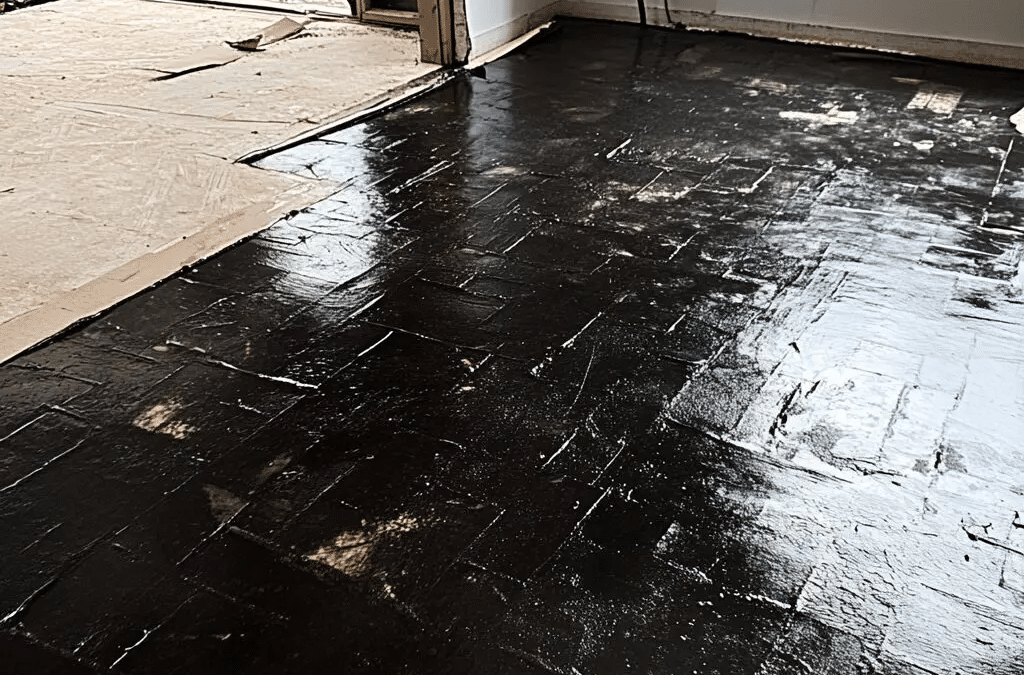
Why should the floor be sealed?
Black mastics are made from crude oil that contains dozens of “forever chemicals” and Class 1 carcinogenic compounds. Asbestos mastic is that same material with the addition of 1-4% Chrysotile asbestos, also known as white asbestos. The oil-based material makes up most of the other 96% or more of the rest of the coating.
Consider this: if someone were to spill oil on your property, would you be concerned? Would you not demand that it be cleaned up? You would of course be right to demand it.
What if the person who dumped the oil into your home said they would not have to remove it because over time it would dry and harden, and so then you could cover it with a carpet or other flooring system? What would your response be? Would you feel safer and leave the oil in place?
The fact of the matter is that in that this oil, in liquid form, according to EPA standards, would require that your home be cleaned up or condemned as an EPA superfund site.
If it is so dangerous, then why has it not been a problem under the existing floor tile?
The oil and fumes had been contained by the floor tile. However, when the floor tile is removed, air, water vapor, etc. begin acting on the mastic, releasing dangerous gases and oils.
If the mastic was “safe” under the tile, then why is it not safe under a floating floor or carpet?
When it comes to VOCs and carcinogenic chemicals, out of sight is not out of mind.
If you apply a new carpet or LVP-type floating flooring over old black mastic, a space is formed under the flooring materials where moisture and heat are trapped. This creates a warm, dark, moist air gap, where mold can grow. This would create a new problem that may need remediation.
In addition, in areas such as basements, where a concrete slab sits on the ground, the moist air then reacts with the old glue, making it softer. The rubber backing on new flooring products, along with the pressure of foot traffic and the expansion and contraction of these materials wears into the mastic. This releases the toxic VOC gases and oils that were trapped in the glue. In addition to being harmful, this can cause unpleasant odors that seep into any other porous material in the space, and the oils can stain carpets and warp wood or other flooring surface materials.
How can I seal mastic?
If your goal is to apply tile over cement, an epoxy floor, or glued-down carpet or wood, the old mastics can cause these new systems to fail over time, or not work at all.
Putting paint over the mastic does not resolve any of these issues unless that paint is specified for bonding to and sealing oil-based mastics and non-friable asbestos coatings. If they are not designed specifically for this purpose, the paint will peel off and fail within a few months, adding to the problem. Hiding a problem is not solving a problem and typically leads to more expensive problems in the future.
This is why it is necessary to encapsulate and seal all oil-based or cutback mastics before applying new flooring with a product such as PerfectPrimer or a similar material made to seal non-friable mastics, and to not leave them exposed.
FAQs
Why is sealing black mastic important?
Sealing black mastic is crucial because it contains hazardous chemicals and carcinogens that can be released into the air when disturbed. Sealing it prevents these harmful compounds from seeping into your home.
Can I just cover black mastic with new flooring?
No, simply covering black mastic with new flooring can trap moisture, heat, and VOCs beneath the surface, leading to mold growth, odors, and potential damage to your new flooring.
What are the risks of not sealing mastic before installing new flooring?
Failing to seal mastic can result in the release of toxic fumes and oils that can harm your health, cause unpleasant odors, and damage new flooring materials like carpet, wood, or tile.
How can I safely seal mastic on my floor?
To safely seal mastic, use specialized products like PerfectPrimer that are designed for bonding and encapsulating oil-based or cutback mastics. Regular paint will not be effective and may peel over time.
What happens if I don't seal mastic before laying new flooring?
Not sealing mastic can cause floor systems to fail over time, release toxic gases, and even damage your new flooring materials. It may also lead to future costly remediation problems.


