
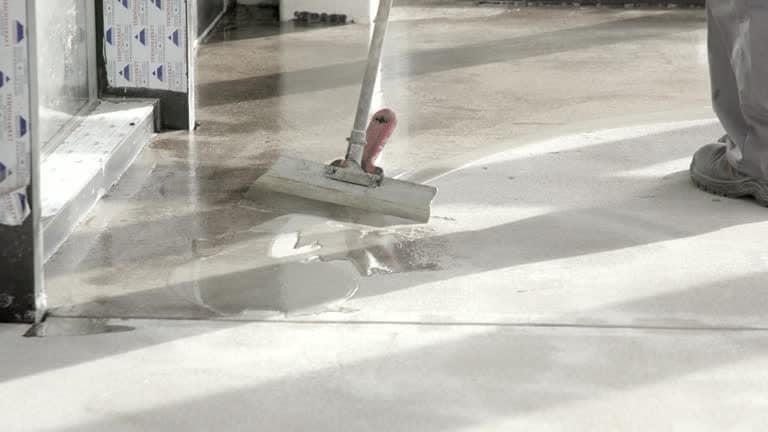
Yes, you can pour self-leveling cement over an existing concrete floor, as long as the slab is sound, stable, clean, and properly prepped. Loose material, grease, dust, and old coatings will stop a good bond, so clear them first.
In most cases, the right primer for self-leveling concrete makes the difference between a flat, lasting finish and a floor that peels. Old adhesive, black mastic, or possible asbestos means you need extra care before you pour anything at all.
Can You Pour Self-Leveling Cement Over Existing Concrete?
Absolutely. It gives you a smooth, flat surface over sound substrates, which makes it a favorite for renovations with dips or uneven spots. It saves time, money, and a lot of dust. You skip tearing out the slab. The catch is what’s underneath. A weak or dirty surface won’t bond, and you’ll see cracks or peeling later. Inspect the floor carefully first.
What Conditions Should An Existing Concrete Floor Meet?
Check these before you start:
- Structural stability: The concrete should be solid, with no crumbling or movement.
- Surface cleanliness: Remove dirt, dust, grease, and oil.
- Moisture: Look for water intrusion and hydrostatic pressure, and fix those first.
- Existing cracks: Repair dormant cracks. Moving cracks signal bigger trouble.
- Surface coatings: Paint, sealers, and old adhesives can block bonding, so confirm compatibility.
- Floor flatness: Note the dips so you pick the right product and thickness.
Self-leveling cement fixes surface irregularities. It can’t fix an unstable foundation.
Why Is Primer For Self Leveling Concrete Important?
Primer is the glue between old concrete and the new layer. Without it, the slab sucks water out of the mix too fast, which hurts flow, curing, and bond. A compatible primer improves adhesion, controls absorption, cuts pinholes, and helps the floor cure evenly.
That’s why most manufacturers require one. Choosing the right primer for self leveling concrete is essential, so always match the primer to your leveling product.
We developed PerfectPrimer to seal concrete, existing coatings, and certain adhesive residues, helping prepare compatible surfaces for self-leveling overlays. It’s a practical option worth considering for renovation projects where proper surface preparation matters.
How To Apply Self-Leveling Cement Over An Existing Concrete Floor?
Step 1: Inspect and Prepare the Surface
Look over the whole floor for cracks, loose concrete, oil, old coatings, and moisture. Sweep up ordinary debris. Handle anything hazardous separately and safely.
Step 2: Repair Existing Damage
Before you pour, fill any holes, chips, and deeper low spots you found with a compatible self leveling concrete patch, which handles depth better than a thin pour. Let it cure per the maker’s directions.
Step 3: Apply the Appropriate Primer
Pick a primer that suits both the old surface and your leveling cement. Roll it on at the specified coverage, avoid puddles, and respect the drying time. Skipping the drying time is a common shortcut that backfires. Over old adhesive or coatings, confirm the primer is approved for that use.
Step 4: Mix the Product
Follow the maker’s water-to-powder ratio. Measure carefully, since guessing gives you uneven results. Mix with a paddle until smooth and lump-free. Don’t add extra water, because overwatering weakens the cured material.
Step 5: Pour and Spread the Compound
Pour the mix and spread it with the recommended tools. Work quickly, because the mix starts setting fast. Keep a wet edge so you avoid ridges, and use a gauge rake if the instructions call for one.
Step 6: Allow Proper Curing
Keep foot traffic and drafts away while it cures. Wait times before tile, vinyl, or laminate depend on thickness, temperature, and humidity. A walkable floor isn’t always ready for final flooring. Patience pays off here.
Can You Apply Self-Leveling Cement Over Old Paint Or Asbestos Mastic?
Old paint, black cutback adhesive, vinyl tiles, and black mastic can contain asbestos. If you suspect asbestos, do not sand, grind, scrape, or drill the material. Have it assessed by a qualified professional and follow local safety regulations.
Using the right paint for asbestos, such as a suitable encapsulating coating, can help seal certain hazardous materials without disturbing them. However, the product must be compatible with the existing material and the intended flooring system.
We make a latex-based bridging encapsulant for compatible mastics and adhesives. We recommend two coats and following the cure times. Confirm suitability with us and your asbestos professional first.
What Are The Common Mistakes To Avoid?
Preparation mistakes sink even great products.
- Skipping the primer: It leads to poor adhesion, uneven drying, and surface defects.
- Ignoring contaminants: Oil, grease, and old adhesive block bonding. Never use aggressive mechanical prep on anything that might contain asbestos.
A little extra care saves costly repairs.
Frequently Asked Questions (FAQs)
1. Can self-leveling cement be applied directly over old concrete?
Yes. It works over sound, clean, stable concrete that’s been properly primed. Follow the compound maker’s prep rules.
2. Do I need a primer before applying self-leveling cement?
Usually, yes. Primer controls absorption and improves bonding, but it has to match your substrate and leveling compound.
3. Can I use a self leveling concrete patch before applying self-leveling cement?
Yes. A compatible patch fills holes, chips, and deeper spots before the main pour. Let it cure as directed.
4. Can I pour self-leveling cement over asbestos floor adhesive?
Only after the material and your system have been assessed and approved. Don’t disturb suspected asbestos adhesive. A compatible encapsulating primer, like ours, may work, with professional and manufacturer sign-off.
5. Can PerfectPrimer be used under self-leveling cement?
Yes. We designed our primer to seal and prime compatible surfaces before self-leveling and modified cement overlays. Use two coats and confirm compatibility with your compound.
Prepare Your Concrete Floor The Right Way
Pouring self-leveling cement over an existing concrete floor beats a full replacement when you do it right. Check the substrate, repair what you can, pick the right primer, and follow the maker’s instructions. Older adhesives and possible asbestos call for even more care. Good preparation makes all the difference in the end.
Our encapsulant helps prepare suitable surfaces for the cement and other flooring systems. Browse our PerfectPrimer Family of Products to find the right fit for your next renovation.


