
Cracks don’t stay where they start. If your subfloor shifts even slightly, that movement can travel straight up through your grout lines and split a brand-new tile installation in half.
It’s one of the most frustrating things that can happen to a tile floor: everything looks perfect on installation day, and months later, hairline cracks start appearing in the grout, or worse, straight through the tile itself. In most cases, the tile isn’t the problem.
The subfloor underneath it is moving, and that movement has nowhere to go but up. This is exactly the scenario a decoupling membrane is designed to prevent, and understanding when you actually need one can save you from a costly repeat installation.
What Does “Decoupling” Actually Mean?
In tile work, “decoupling” simply means separating two layers so they can move independently of each other. A decoupling membrane, sometimes called a tile uncoupling membrane, is a thin, flexible layer installed between the substrate (concrete, plywood, old tile, cement board) and the new tile above it. Instead of bonding the tile rigidly to a subfloor that expands, contracts, or shifts, the membrane absorbs that movement so the tile above stays put.
Think of it as a shock absorber for your floor. Concrete slabs naturally develop hairline cracks as they cure and settle over the years. Wood subfloors expand and contract with humidity and temperature. Without a buffer layer, every one of those tiny movements transfers directly into your grout joints and tile, eventually leading to cracking, popped tiles, or lippage.
Decoupling Membrane vs. Crack Isolation Membrane: What’s the Difference?
These two terms get used interchangeably, but they’re not quite the same thing.
- A decoupling (uncoupling) membrane creates a true separation layer, often with a geometric or cavity structure, that allows the tile and substrate to move almost entirely independently. It handles both existing stress and future movement.
- A crack isolation membrane is typically a flatter, bonded layer designed to bridge and isolate minor existing cracks (generally up to about 1/8 inch) so they don’t telegraph upward into the tile.
In practice, most residential and light commercial projects need effective crack isolation and stress-relief more than a heavy-duty structural uncoupling system, particularly when the substrate is generally sound but has minor cracking, seams, or an older tile-over-tile situation.
Signs You Need A Decoupling Or Crack Isolation Membrane
Not every tile job requires one, but you should seriously consider it if:
- Your slab already has visible cracks. Even hairline cracks in concrete are a strong predictor of future tile cracking if left untreated.
- You’re tiling over an older concrete slab. Slabs continue to cure and shift for years after they’re poured.
- You’re installing over a wood subfloor. Wood naturally flexes with seasonal humidity changes, and that flex needs somewhere to go besides your grout lines.
- You’re tiling over an existing floor. Transitions between dissimilar materials, like old vinyl, wood, or a previous tile layer, often move at different rates than new tile.
- The area sees temperature swings or heavy foot traffic. Garages, mudrooms, sunrooms, and commercial spaces all put extra stress on a rigid tile bond.
If none of these apply and you’re working with a newer, crack-free, structurally stable slab, a full membrane system may be optional. But when in doubt, the cost of installing a protective layer is minor compared to the cost of tearing out and replacing cracked tile.
How We Approach Crack Isolation And Membrane Systems?
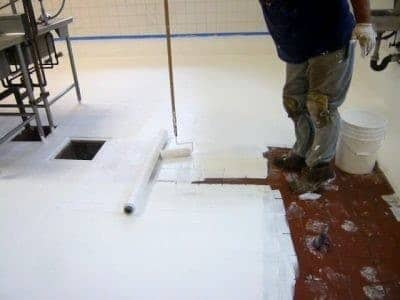
We built our product line around a simple idea: floors move, and your prep work should account for that instead of fighting it. For flexible, liquid-applied membrane protection, PerfectMembrane works as a crack-repair and coatings-primer system in one, forming a flexible barrier that absorbs substrate stress while remaining compatible with tile mastics, epoxies, and modified cements applied on top.
It’s designed to work on virtually any substrate, indoors or out, which makes it a practical option for both wet areas and standard tile floors before the finished flooring goes down.
For existing cracks that need direct reinforcement before tiling, we recommend combining PerfectPrimer with PolyTex Fabric and TrueGrit. This system works by filling the crack with a encapsulant -and-TrueGrit putty, brushing a coat of Encapsulant over the crack, embedding PolyTex Fabric directly into it, then sealing with a second coat of PerfectPrimer Encapsulant.
The fabric bridges the crack while the primer keeps it flexible and bonded, isolating existing stress points so they don’t transfer into your finished tile.
It’s a technique that’s been used successfully on both residential slabs and commercial overlay projects, and it pairs well with PerfectMembrane on larger areas where broader crack protection and waterproofing are needed together.
Best Practices Before Installing Tile Over A Membrane
- Clean the substrate first. Dust, oils, and old adhesive residue interfere with membrane adhesion, so a proper floor prep cleaner should always come first.
- Address existing cracks individually. Don’t rely on a membrane alone to fix structural cracks. Reinforce them directly with fabric and primer where needed.
- Confirm cure times. Applying tile too soon over a wet membrane can compromise the bond and defeat the purpose of the system.
- Match the membrane to the job. Wet areas, underfloor heating, and heavy-traffic zones may call for a different combination of products than a simple dry interior floor.
Reach Out To Us!!
A tile floor is only as strong as what’s underneath it. Taking the time to isolate movement and reinforce cracks with a decoupling membrane before you tile is one of the simplest ways to protect your floor from cracks and damage. Proper preparation can help prevent problems and reduce the chance of having to redo the work later.
If you’re planning a tile project over an older slab, a wood subfloor, or an existing floor, explore our full range of primers, membranes, and crack-repair systems at PerfectPrimer to find the right combination for your job.
Decoupling Membrane FAQs
1. Do I really need a decoupling membrane for every tile job?
Not always. It’s most important over cracked concrete, wood subfloors, older slabs, or when tiling over an existing floor. Stable, crack-free, newly poured slabs may not require one.
2. Can a decoupling membrane fix an already cracked tile floor?
No. A membrane is a preventive layer installed before new tile goes down. If tiles are already cracked, the damaged tile and underlying issue need to be addressed before reinstalling with a protective membrane.
3. What’s the difference between a tile uncoupling membrane and waterproofing?
Some membranes do both, but they’re not automatically the same. A product like PerfectMembrane combines flexible crack protection with waterproofing capability, but always confirm a membrane is rated for wet areas before using it in showers or exterior applications.
4. Can I install a decoupling system myself, or do I need a professional?
Liquid-applied systems like PerfectPrimer Encapsulant with PolyTex Fabric are designed to be DIY-friendly, using simple brush-and-roll application. Larger commercial jobs or structurally significant cracks may still benefit from professional evaluation.
5. How long should I wait before tiling over a membrane?
Cure times vary by product and conditions, but most liquid-applied systems are ready within about 12 hours. Always confirm full cure before applying thin-set or adhesive on top.


