
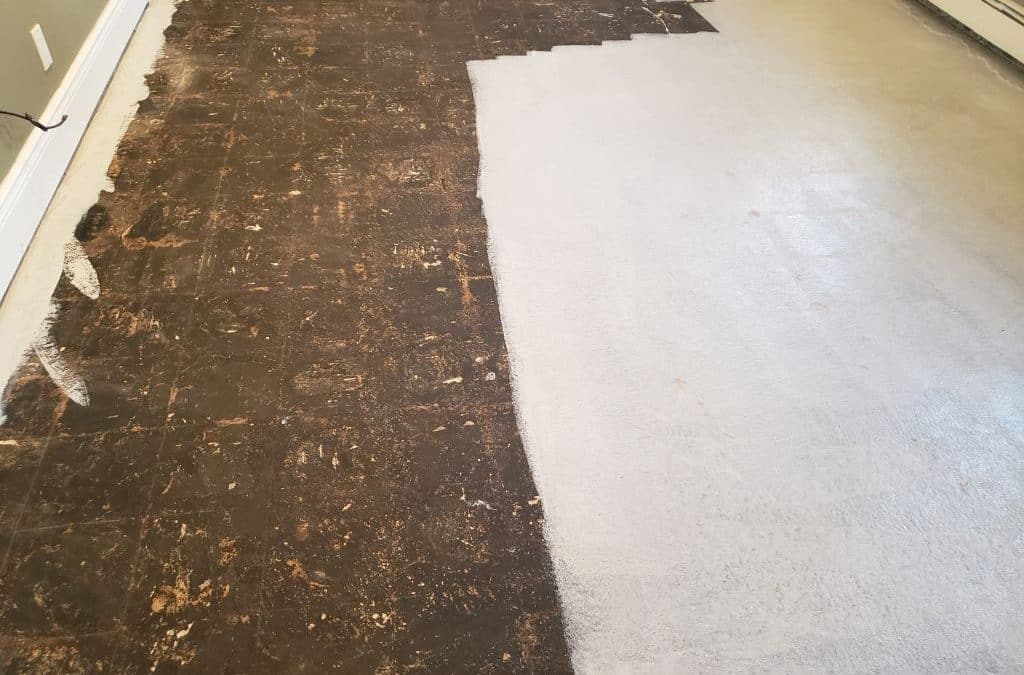
That old black glue under your flooring may be more dangerous than it looks. If you remove old vinyl tile or carpet and find sticky black or brown material on the concrete, you may be dealing with asbestos mastic. Trying to scrape, grind, or dissolve it can release harmful fibers into the air if asbestos is present.
The safer option may be encapsulation, which seals the material in place instead of disturbing it. Before installing new flooring, learn how to identify the risk, prepare the surface, and manage it safely.
Why You Shouldn’t Try To Remove Asbestos Mastic Yourself?
Mastic adhesives manufactured before the early 1980s frequently contain asbestos, a mineral fiber that becomes hazardous only when it’s disturbed and inhaled. Grinding, sanding, dry-scraping, or aggressively dissolving old mastic releases microscopic fibers into the air, where they can be inhaled and remain a health risk for years afterward.
Since 2017, OSHA regulations have specifically restricted the disturbance of asbestos-containing mastics and adhesives. The EPA has also long recognized “encapsulation,” sealing a hazardous material in place rather than removing it, as a legitimate abatement strategy when done correctly. That’s why the safest, most compliant path for most homeowners and contractors isn’t removal at all. It’s sealing.
Encapsulation: The Safer Alternative To Removal
Encapsulation works by coating the old mastic with a specialized asbestos sealant that locks the material in place, forming a physical barrier so fibers can’t become airborne. Once encapsulated, the surface is stable enough to accept a new floor covering (tile, laminate, vinyl plank, epoxy, or carpet) without the dust, cost, or risk associated with abatement or mechanical grinding.
This is a very different category of product from a typical asbestos mastic remover. A remover is designed to dissolve or soften the adhesive so it can be scraped away, which is precisely the disturbance you’re trying to avoid with asbestos-containing material.
A true sealant does the opposite: it penetrates and bonds to the mastic, encapsulating it rather than breaking it down. This is exactly the role our flagship product, PerfectPrimer® Encapsulant, is built to play.
It’s formulated specifically to safely seal asbestos mastic, cutback glue, and black tar adhesives in place, meeting EPA encapsulation guidelines without grinding, soy gels, acids, or removal.
Prepping The Surface Before You Seal
Before any encapsulating primer goes down, the existing mastic should be lightly cleaned, not scraped or ground, to remove loose dust, dirt, or surface contaminants that could interfere with adhesion.
This is where Perfect Cleaner, a non-toxic, citrus-based concentrated cleaner, comes in. It’s designed as the ideal floor prep step ahead of an encapsulating primer, since it won’t disturb the mastic layer or introduce harsh solvents into an indoor space.
Once the surface is clean and dry, our Encapsulant can be rolled or brushed directly over the mastic. A single coat is often enough to stabilize most residential floors, though heavier or uneven mastic deposits may benefit from a second application. After curing, typically within 12 hours, the surface is ready for the next step.
Choosing The Right Finish For Your New Floor
What goes on top of the sealed mastic depends on what kind of flooring you’re installing next:
- Installing tile, glue-down flooring, epoxy, or self-leveling cement? PerfectPrimer® Encapsulant creates a stable, highly bondable base for thin-set, epoxy coatings, tile adhesives, and cementitious overlays applied directly on top.
- Installing laminate, vinyl plank, wood click flooring, or carpet? Perfect Paint, our Floating Floor Prep formula, is purpose-built to seal and prepare asbestos mastic specifically for foot traffic and floating floor installations, all in one step, with no grinding required.
- Want a durable, walkable, painted finish over concrete? This is where a quality concrete paint floor system comes in. After encapsulating with Encapsulant or Perfect Paint, our hybrid PaintPlus can be applied directly over the sealed surface as a concrete floor paint, combining epoxy-like toughness with the simplicity of a roll-on latex application, ideal for basements, garages, and commercial spaces alike.
Together, these three products cover the full workflow: Perfect Cleaner to prep, PerfectPrimer® Encapsulant or Perfect Paint to encapsulate, and Paint Plus to finish. The entire job, from old mastic to a walkable, floor-ready surface, can be handled without a single grinder or abatement crew.
A Few Best Practices Worth Following
- Never dry-sand or grind mastic to “prep” it before sealing. This defeats the entire purpose of encapsulation.
- Test suspect material first. If you’re unsure whether your old adhesive contains asbestos, have it tested by an accredited lab before proceeding.
- Ventilate the workspace while priming, even though Encapsulant and Perfect Paint are low-odor and non-toxic.
- Follow cure times exactly. Installing flooring too soon over a primer that hasn’t fully cured can compromise the bond.
- Check local regulations. Some jurisdictions have specific rules for asbestos-containing material even when encapsulation is used. When in doubt, consult a licensed abatement professional for large-scale commercial jobs.
Contact Us Now!!
Dealing with old black mastic doesn’t have to mean dust masks, grinders, and a long removal process. With the right encapsulating primer and asbestos sealant, you may be able to seal suitable material in place, avoid unnecessary disturbance, and move on to installing the floor you actually want.
The key is proper surface preparation and following the right safety steps. If the mastic may contain asbestos, do not scrape, grind, or sand it before determining the safest way to manage it. That’s the exact problem we’ve spent over 20 years solving.
Explore our full lineup of primers, sealants, and floor coatings at PerfectPrimer to find the right system for your project.
FAQs
1. Is it legal to seal over asbestos mastic instead of removing it?
Yes. Encapsulation is recognized by the EPA as an acceptable method for managing asbestos-containing material in place, and it avoids the OSHA-regulated disturbance that removal methods create. The Encapsulant is formulated to meet these EPA encapsulation guidelines.
2. Can I install new flooring directly over asbestos mastic?
Not directly. The mastic should first be sealed with an encapsulating primer like Encapsulant or Perfect Paint. Once cured, most flooring types, including tile, laminate, vinyl plank, and carpet, can be installed over the sealed surface.
3. What’s the difference between an asbestos mastic remover and a sealant?
A remover is meant to dissolve the mastic for scraping, which risks releasing fibers. A sealant like Encapsulant encapsulates the mastic in place, locking it down without disturbing it, the safer, regulation-aligned option.
4. How long does encapsulating primer need to cure before flooring installation?
The encapsulant typically cures within about 12 hours under normal indoor conditions, though thicker applications or cooler temperatures may require longer before installation begins.
5. Can I paint over sealed mastic instead of installing new flooring?
Yes. Once the mastic is properly encapsulated with PerfectPrimer® Encapsulant, our hybrid concrete floor paint, Paint Plus, can be applied directly on top for a durable, walkable finish, a popular option for basements, garages, and commercial floors.


