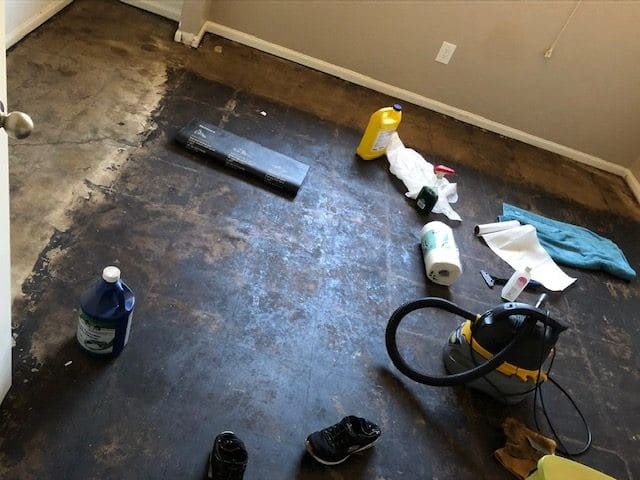
Black mastic removal and encapsulation are two ways to deal with old flooring glue that may contain asbestos. Removal takes the glue away, while encapsulation covers it with a special coating to help prevent exposure to harmful fibers.
If your floor contains black mastic asbestos, choosing the right method is important for your health, budget, and renovation plans. The best option depends on the glue’s condition, your new flooring, and local safety rules. Understanding both methods helps you make a safer, more informed choice.
What Is Black Mastic, And Why Can It Contain Asbestos?
Black mastic is a dark, sticky glue once used to hold floor tiles and other flooring materials in place. Some older types contained asbestos, a mineral that was added to building products because it made them strong and durable.
However, not all black mastic contains asbestos. You cannot tell whether it is present just by looking at the glue. Testing by a qualified professional may be needed.
The main danger comes when asbestos-containing material is disturbed. Scraping, sanding, or grinding can release tiny fibers into the air. Breathing these fibers can cause serious illnesses, including lung cancer and mesothelioma.
If you suspect your flooring glue contains asbestos, do not disturb it. Contact a qualified asbestos professional to discuss testing and safe ways to manage it.
What Is The Difference Between Black Mastic Removal And Encapsulation?
The main difference is simple: removal takes the old glue away, while encapsulation covers it and leaves it in place.
Both methods can work in certain situations. The right choice depends on the condition of the glue, the type of new flooring, safety rules, and the amount of work needed.
| Comparison factor | Black mastic removal | Black mastic encapsulation |
| Main purpose | Removes the old glue | Seals the glue in place |
| Risk of disturbing asbestos | Can release fibers if handled incorrectly | Helps reduce disturbance |
| Safety needs | May require trained asbestos professionals | Requires a suitable coating and correct application |
| Cost | May involve higher labor and disposal costs | May reduce removal-related costs |
| Project time | Depends on removal and cleanup | May take less time if the surface is suitable |
| Floor preparation | Leaves the underlying surface exposed | Keeps the glue beneath the coating |
| New flooring | Depends on the condition of the exposed floor | Depends on coating and flooring compatibility |
| Future care | Requires checking that removal and cleanup were completed properly | Requires the coating to stay in good condition |
What Is Black Mastic Encapsulation, And How Does It Work?
Black mastic encapsulation means covering the old glue with a special coating that forms a protective layer. Instead of scraping away glue that may contain asbestos, the coating seals it in place.
The coating must stick properly to the surface and work with the new flooring or finish. It must also be applied according to the product instructions.
This method may be useful when updating older homes, basements, storage rooms, and commercial buildings where black mastic remains under existing flooring.
Why Do Property Owners Choose Encapsulation?
Encapsulation can offer several benefits:
- Less disturbance: It avoids the need for aggressive scraping or grinding when the glue can remain in place.
- Less disruption: Keeping the old glue in place may reduce the amount of demolition and cleanup needed.
- Possible cost savings: It may lower labor and waste disposal costs compared with removal.
- Better preparation: Some special coatings can also prepare the surface for compatible flooring products.
- A practical option: It can help manage stable glue without removing every trace of the old material.
However, encapsulation does not remove asbestos. The glue stays underneath the coating, so the sealed surface must be protected from damage. Future repairs must also take the hidden material into account.
Is A Black Mastic Remover Better Than Encapsulation?
A black mastic remover is a product designed to soften or break down old flooring glue so it can be removed. Some products use chemicals to loosen the adhesive.
Removing the glue may seem like the best solution, but using the wrong product on material that contains asbestos can create health risks. Scraping or other removal methods may release harmful fibers. Some chemicals can also leave residue or damage the floor.
Before using a remover, find out whether asbestos may be present. Do not assume that a regular adhesive remover is safe for asbestos-containing material.
If removal is necessary, a qualified asbestos professional can explain the proper process, including safe handling, cleanup, and disposal. If the glue is suitable for sealing, encapsulation may be a less disruptive option.
What Is The Best Paint For Asbestos Encapsulation?
Regular wall paint or floor paint is not automatically suitable for sealing asbestos. The product must be designed for the surface and the job you need it to do.
Asbestos encapsulation paint and special primers can help seal certain asbestos-containing materials when used correctly. The right choice depends on the surface and the new flooring you plan to install.
Before choosing paint for asbestos, check these important points:
- Will it stick properly to the old glue and floor?
- Is it compatible with your planned flooring or topcoat?
- How many coats are needed?
- How long does it take to dry and cure?
- Is it suitable for the specific material and intended use?
Black mastic can be oily or tar-like, which makes choosing the right coating especially important. Always read the product instructions and technical information before starting work.
How Can PerfectPrimer Help Encapsulate Black Mastic?
If you want to avoid removing suitable black mastic, we offer PerfectPrimer, a specialized encapsulating primer designed for black mastic, cutback adhesives, and other difficult surfaces.
Our product is intended to seal and prime suitable existing surfaces without grinding or sanding the adhesive. This can help reduce disturbance and prepare the floor for compatible finishes, such as epoxy coatings, thin-set tile systems, and decorative or leveling cement.
PerfectPrimer is different from a black mastic remover because it is designed to leave the existing glue in place rather than remove it.
However, the surface must meet the product’s requirements. Encapsulation is not suitable for every floor, and suspected asbestos must be handled according to local safety rules.
How Is PerfectPrimer Applied?
The correct steps depend on the floor’s condition and the planned finish. Our product guidance describes this general process:
- Check the surface: Look for signs of damage without disturbing the suspected asbestos-containing material.
- Prepare the floor: Follow the product instructions for suitable cleaning and preparation.
- Apply the first coat: Use the recommended tools and avoid leaving thick pools of primer.
- Allow drying time: Our guidance calls for about 12 hours before applying the second coat.
- Apply the second coat: Follow the stated coverage and application instructions.
- Allow the coating to cure: Our guidance specifies about 24 hours after the second coat before moving to the next step, subject to the full instructions.
- Add the new finish: Install compatible flooring or apply the approved finish when the surface is ready.
These times are specific to the product and may depend on the conditions. Always check the latest instructions before starting. If the glue is damaged or unsuitable for sealing, seek professional advice.
When Should You Choose Removal Instead Of Encapsulation?
Encapsulation is not the right choice for every situation. Removal or another professional solution may be needed if the glue is badly damaged, the floor needs major repairs, or the coating cannot stick properly.
Some building projects or local rules may also require asbestos removal. In these cases, a qualified asbestos professional can help determine the safest approach.
If the glue is stable and can be sealed correctly, encapsulation may be a practical option. Remember that asbestos-containing material remains underneath the coating. Tell future contractors about it before any repairs or renovations begin.
People Also Ask
- Is it safer to encapsulate black mastic than to remove it?
Encapsulation may reduce the risk of exposure because it avoids disturbing the glue. However, the material must be suitable for sealing, and safety rules must be followed.
- Can you paint directly over black mastic asbestos?
Some special primers and coatings are designed for this purpose. Regular paint may not stick properly or provide a suitable seal. Check the product instructions before use.
- Does encapsulation permanently remove the asbestos hazard?
No. Encapsulation leaves the asbestos-containing material in place. The coating helps manage exposure risks, but damage or future renovation can create new risks.
- Can I use a black mastic remover if the glue contains asbestos?
Do not use a general-purpose remover on suspected asbestos-containing glue without professional guidance. Removal products and scraping can disturb the material and release harmful fibers.
- Which is better for installing new flooring: removal or encapsulation?
It depends on the glue’s condition, the type of new flooring, and local rules. A suitable encapsulant may work with some flooring systems, while other projects may require professional removal.
Choose A Solution That Protects Your Renovation
Choosing between black mastic removal and encapsulation depends on the glue’s condition, your flooring plans, and local safety rules. Removal takes the glue away, while encapsulation seals suitable material in place to help reduce disturbance. Neither method fits every floor, so professional advice is important when asbestos may be present.
If you are looking for a specialized primer for your project, we invite you to explore our products from PerfectPrimer Products and review our product details before choosing your next step.