
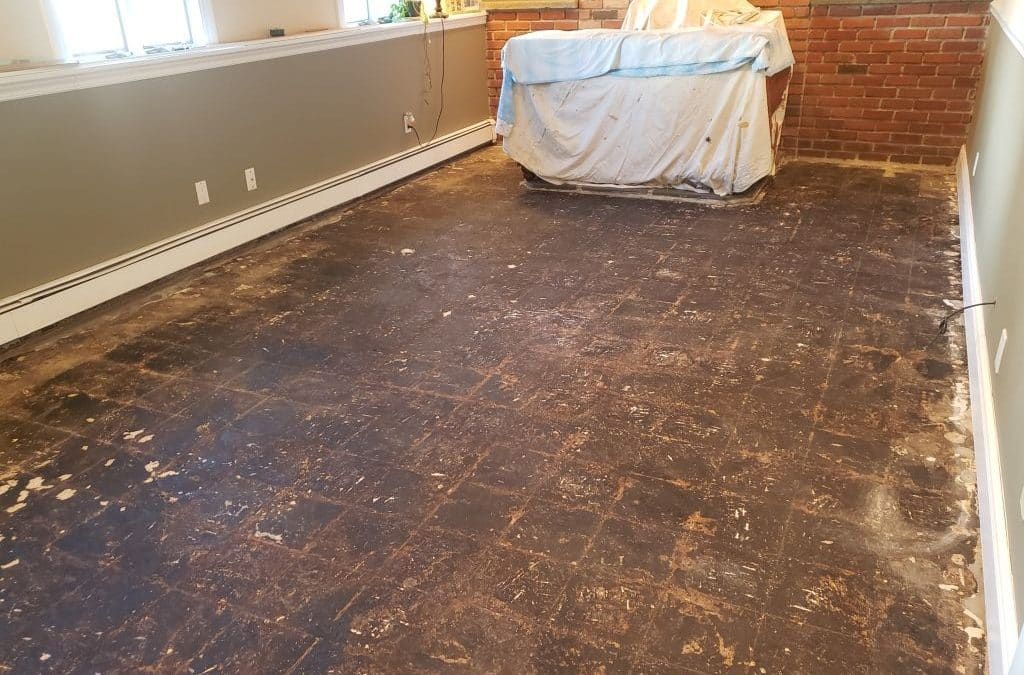
Old floors can hide a sticky problem underneath! Black mastic is a dark glue used to hold floor tiles in place. Some older types contain black mastic asbestos, which can be harmful if disturbed and released into the air.
Removing this glue is difficult because it sticks tightly to the floor and leaves behind stubborn residue. The good news is that removal is not always needed. A special coating called an encapsulant may help seal suitable black mastic and prepare the floor for new flooring.
What Is Black Mastic?
Black mastic is a dark, sticky glue used to attach floor tiles and other flooring materials. It was common in older homes, schools, offices, and commercial buildings.
This glue often stays under old vinyl tiles, linoleum, and other floor coverings for many years. It sticks firmly to surfaces such as concrete and wood.
Some older black mastic products contain asbestos, a mineral once used to make building materials stronger. However, not all black mastic contains asbestos. You cannot tell whether it is present just by looking at the glue.
If you think your floor may contain asbestos, do not scrape or sand it. Contact a qualified asbestos professional to learn how to check and manage it safely.
Why Is Black Mastic So Difficult To Remove?
Black mastic is harder to remove than ordinary glue because it sticks strongly to the floor and can leave a dark, sticky layer behind.
Here are the main reasons:
- Strong grip: The glue bonds tightly to concrete and other surfaces.
- Sticky remains: Even after some glue is removed, a thin layer may stay behind.
- Oily texture: Some types contain asphalt, which can make new flooring products harder to stick.
- Large areas: Cleaning glue from a whole room can take a lot of time and work.
- Possible asbestos: If the glue contains asbestos, disturbing it can release harmful fibers.
These problems make black mastic removal a difficult job. The safest choice depends on the glue, the floor, and the new flooring you want to install.
What Makes Black Mastic Asbestos Dangerous?
The main danger of black mastic asbestos is that it may release tiny asbestos fibers when disturbed. These fibers are too small to see easily. If they enter the air and are breathed in, they can cause serious diseases, including lung cancer and mesothelioma.
Activities such as sanding, grinding, and aggressive scraping can increase the risk of exposure. Some chemical treatments may also create problems if they disturb the material or spread contamination.
Finding old black mastic does not always mean it must be removed. In some cases, suitable material can stay in place and be sealed.
If you suspect asbestos is present, leave the material undisturbed and ask a qualified asbestos professional for advice.
Can You Remove Black Mastic Without Damaging The Floor?
Removing black mastic without damaging the floor can be difficult. Scraping may scratch the surface, while strong chemicals may leave behind residue.
A black mastic remover is a product designed to soften old glue and make removal easier. However, a regular adhesive remover is not automatically safe for glue that may contain asbestos.
Using the wrong product or removal method can disturb the material and create health risks. Chemicals may also affect the surface and make it harder for new flooring to stick properly.
Before choosing a removal method, consider the condition of the floor and the type of flooring you plan to install. If asbestos may be present, speak with a qualified professional before doing any work.
For suitable black mastic, encapsulation may be another option. This method seals the glue in place instead of removing it.
What Is Black Mastic Encapsulation, and Why Is It Useful?
Black mastic encapsulation means covering the old glue with a special coating. The coating creates a protective layer that helps reduce the chance of disturbing the material.
Unlike removal, encapsulation leaves the glue underneath the coating. This may reduce the amount of demolition, cleanup, and labor needed for some flooring projects.
A special primer can also help prepare the surface for certain types of new flooring, including tile, epoxy, and cement-based finishes.
However, regular paint or primer may not work. The product must be suitable for the surface and the flooring you plan to use.
Encapsulation does not remove asbestos. The material remains underneath, so the coating must be protected from damage.
How Can PerfectPrimer Help Seal Black Mastic?
When black mastic is suitable for encapsulation, PerfectPrimer can offer an alternative to removing the old glue.
We offer PerfectPrimer as a specialized encapsulating primer designed for difficult surfaces, including black mastic and cutback adhesives. Our product is intended to seal and prepare suitable surfaces without grinding or sanding the existing adhesive.
According to our product information, it can prepare suitable floors for compatible finishes, such as epoxy coatings, tile systems, and decorative or leveling cement.
This may help reduce unnecessary work when the old glue can safely remain in place.
What Are The Benefits Of Using An Encapsulating Primer?
A suitable encapsulating primer may offer these benefits:
- Less disturbance: The glue can stay in place instead of being scraped or ground away.
- Easier preparation: Some removal and cleanup work may be avoided.
- Better bonding: A suitable primer can prepare the floor for compatible materials.
- Possible savings: Less removal work may reduce labor costs.
- More flooring choices: Some sealed surfaces can accept compatible tile, epoxy, or cement-based finishes.
Always check the product instructions before use. If asbestos may be present, follow professional advice and local safety rules.
Can You Install A Tile Uncoupling Membrane Over Black Mastic?
A tile uncoupling membrane is a special layer placed beneath tiles. It helps reduce the effect of small movements between the floor and the tiles, which can help protect the tiled surface from damage.
A decoupling membrane serves a similar purpose by separating the tile layer from some movement in the floor underneath.
However, these membranes do not automatically seal asbestos or make unsafe glue safe to disturb. The membrane, primer, tile adhesive, and floor must all work together.
We also offer PerfectMembrane, a fabric-reinforced membrane designed for use with different surfaces and compatible finishes. Our product information describes its intended use over certain mastic and asphalt surfaces.
Read our PerfectMembrane product details to learn more about its uses and installation requirements.
If asbestos may be present, do not scrape or grind the glue to prepare for a membrane. Seek professional advice first.
When Should You Choose Encapsulation Instead Of Removal?
Encapsulation may be suitable when the glue is stable, the surface can be sealed properly, and the new flooring can be installed over the chosen system.
Removal or another professional solution may be needed if the glue is badly damaged, the floor needs major repairs, or local rules require removal.
Before making a choice, consider the floor’s condition, the new flooring, and the product instructions. A qualified asbestos professional can help you decide what to do if asbestos may be present.
People Also Ask
- Does all black mastic contain asbestos?
No. Some older products contain asbestos, while others do not. Testing by a qualified professional may be needed to find out.
- Why is black mastic so hard to remove?
It sticks firmly to the floor and can leave behind a dark, sticky layer that is difficult to clean.
- Is a black mastic remover safe for asbestos-containing glue?
Not always. Some removal methods can release harmful fibers. Ask a qualified asbestos professional before trying to remove suspected asbestos-containing material.
- Can you cover black mastic with new flooring?
Sometimes. The glue and floor must be suitable for the new flooring system. A special encapsulating primer may help prepare the surface.
- Can a decoupling membrane seal black mastic?
Not necessarily. A decoupling membrane is mainly designed to manage movement beneath tiles. Check the manufacturer’s instructions to confirm whether the complete system is suitable for your floor.
Find A Practical Way To Manage Black Mastic
Black mastic is hard to remove because it sticks tightly to floors and leaves stubborn residue. Some older products contain asbestos, so disturbing them can be dangerous. If the glue is suitable, encapsulation may help seal it without removal. Always seek professional advice when asbestos is suspected.
To explore another option for your flooring project, we invite you to learn more about PerfectPrimer Products and how our PerfectPrimer encapsulant may help prepare suitable surfaces for compatible new flooring.


